
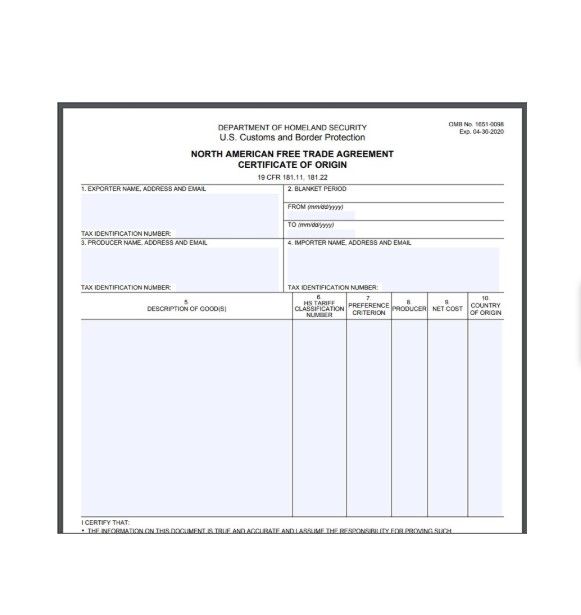
International trade relies heavily on accurate documentation to ensure goods move smoothly across borders while complying with regulator y requirements. Businesses engaged in cross-border commerce must follow specific certification processes to benefit from trade agreements and avoid unnecessary tariffs or delays.
One such important document in North American trade history is the NAFTA cert, which plays a key role in verifying the origin of goods traded between countries under the North American Free Trade Agreement framework.
What Is a NAFTA Certificate of Origin?
The NAFTA Certificate of Origin is an official document used to certify that goods being exported between the United States, Canada, and Mexico qualify for preferential tariff treatment under the agreement. It confirms that the products meet the rules of origin established by NAFTA.
The main purpose of this certification is to:
- Verify where goods are manufactured or produced
- Determine eligibility for reduced or zero tariffs
- Support customs clearance processes
- Ensure compliance with trade regulations
- Prevent misclassification of imported goods
Because of these functions, the NAFTA cert has been an essential part of cross-border trade operations.
Importance of Rules of Origin in Trade Agreements
Rules of origin determine whether a product qualifies for preferential treatment under a trade agreement. These rules help ensure that only goods genuinely produced within member countries benefit from reduced tariffs.
Key aspects include:
- Determining substantial transformation of goods
- Verifying production processes
- Identifying regional value content
- Ensuring compliance with documentation requirements
Accurate certification ensures fair trade practices and transparency in international commerce.
How the NAFTA Certification Process Works?
The certification process involves providing detailed information about the product, its manufacturing process, and its components. Exporters or producers must complete the required documentation and submit it to customs authorities when necessary.
Product Identification
Goods must be clearly described and classified according to customs standards.
Origin Verification
Manufacturers must confirm that the product meets origin requirements under the agreement.
Documentation Submission
The completed certificate is provided to importers and customs officials to support duty-free or reduced-duty claims.
The NAFTA cert ensures that all these steps are properly documented and verified.
Benefits of NAFTA Certification for Businesses
Businesses engaged in international trade benefit significantly from proper certification. It helps streamline operations and reduce costs associated with cross-border transactions.
Reduced Tariffs
Products that qualify under the agreement may be imported with reduced or zero tariffs.
Faster Customs Clearance
Proper documentation helps avoid delays at border checkpoints.
Competitive Advantage
Lower import costs can improve pricing competitiveness in international markets.
Improved Trade Compliance
Ensures adherence to legal and regulatory requirements across countries.
These advantages make trade certification an essential part of global supply chain management.
Common Challenges in Certification
Despite its benefits, businesses may face challenges when dealing with trade documentation.
Common issues include:
- Misinterpretation of rules of origin
- Incomplete or inaccurate documentation
- Changes in trade regulations
- Complexity in supply chain tracking
- Administrative delays
Proper training and compliance systems help reduce these challenges significantly.
Evolving Trade Agreements and Modern Practices
While NAFTA has been replaced by the USMCA (United States-Mexico-Canada Agreement), the concept of origin certification remains highly relevant. Modern trade agreements continue to rely on similar documentation principles to ensure fair and transparent trade.
Businesses must stay updated with evolving regulations to maintain compliance and avoid disruptions.
Importance of Accuracy in Trade Documentation
Accuracy in trade documentation is critical for avoiding penalties, delays, and financial losses. Even small errors in certification can lead to customs disputes or shipment holds.
Ensuring proper verification and documentation management is essential for smooth international operations.
Conclusion
Trade certification plays a vital role in ensuring efficient and compliant cross-border commerce. Many industrial and logistics professionals also explore related material handling and sealing solutions such as PTFE sticky tape when optimizing packaging and export processes alongside proper documentation. Proper documentation helps businesses benefit from trade agreements while maintaining regulatory transparency and operational efficiency.